Where I've Been

A history of my professional roles, responsibilities, and impactful contributions.

Biomedical Data Science Intern

May 2026 - Present
Longeviti Neuro Solutions
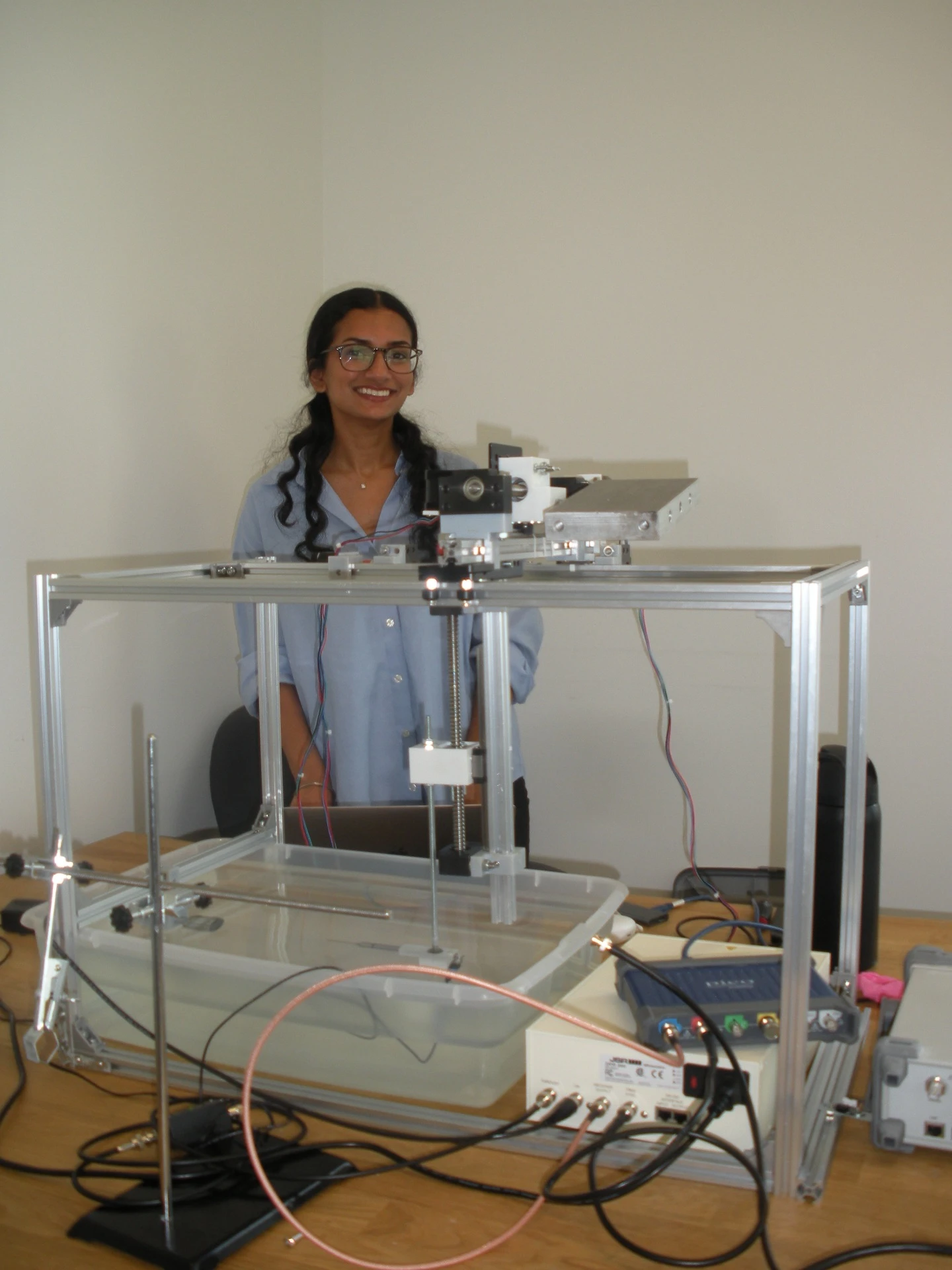
Avneet Bahra with the ultrasound acoustic-characterization tank and automated motion-control system

Leading the end-to-end development of an ultrasound acoustic-characterization and passive cavitation detection platform for evaluating therapeutic ultrasound transmission through cranial implants and supporting blood-brain barrier disruption research. The system integrates custom experimental hardware, automated acquisition, signal processing, interactive visualization, and machine-learning-ready data outputs.

  • Developed a passive cavitation detection workflow using a receiving transducer, low-noise amplification, and PicoScope acquisition to capture repeated microbubble emissions and quantify subharmonic, harmonic, ultraharmonic, and broadband acoustic features.
  • Built Python and Arduino software for automated three-dimensional acoustic-field scanning, adaptive focal-region searches, and interactive Plotly visualizations of peak negative pressure, mechanical index, implant attenuation, and spatial signal quality.
  • Designed and assembled an acoustic-characterization tank with a three-axis motion system, integrating ultrasound emitters, hydrophones, receiving transducers, cranial implants, and tissue-mimicking phantoms for repeatable benchtop testing.
  • Created scientific data pipelines with PicoSDK, NumPy, Pandas, SciPy, and Matplotlib for calibration, filtering, windowing, FFT/PSD analysis, quality control, repeatability assessment, condition comparison, feature extraction, and downstream machine-learning development.
Undergraduate Researcher, ML in CT Imaging

April 2026 - Present
University of Maryland & Old Dominion University
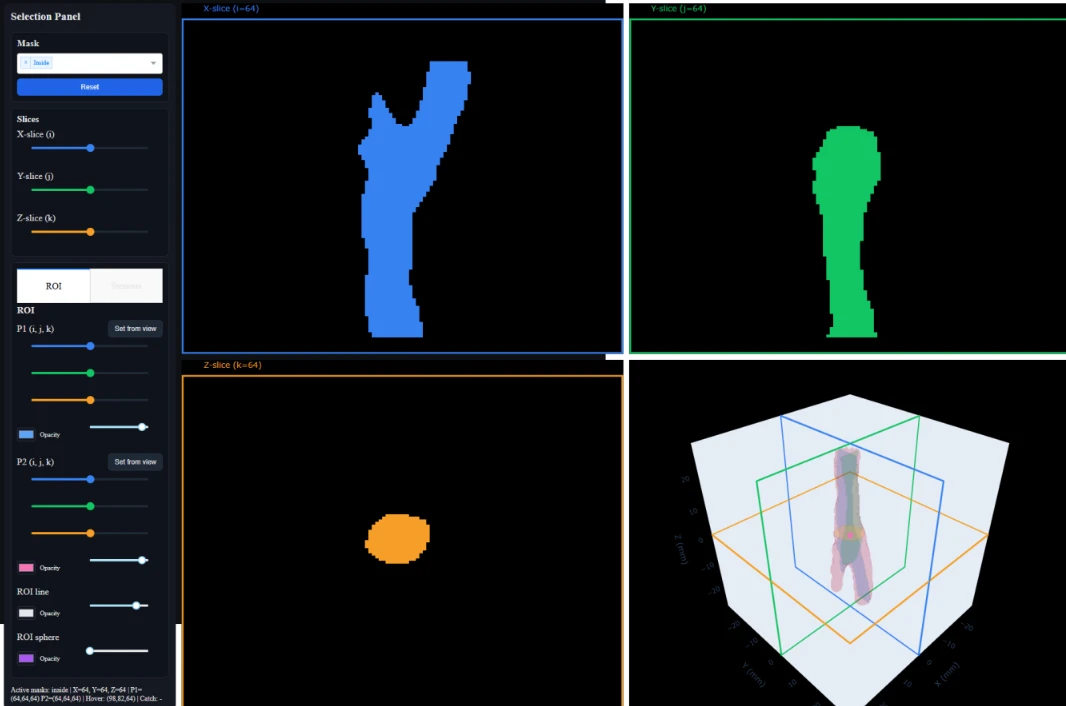
FakeCT medical-image reconstruction and anatomical label analysis

Conducting computational medical-imaging research within the FakeCT framework, developing scalable anatomical representations and neighborhood-aware label-reconstruction methods for synthetic cardiovascular model generation. The work supports machine-learning applications and in silico trials by transforming volumetric imaging data into anatomically meaningful computational models.

  • Developed a neighborhood-aware anatomical label-reconstruction algorithm that evaluates surrounding tissue classes to restore regions altered by simulated vascular erosion, supporting anatomically consistent synthetic model generation.
  • Built Python and VTK pipelines for volumetric image processing, region-of-interest analysis, layered neighborhood extraction, candidate-label evaluation, and visualization of original, eroded, and reconstructed anatomy.
  • Co-author of “A Scalable Image-Based Anatomical Representation Framework for Synthetic Cardiovascular Model Generation and In Silico Trials,” accepted for poster presentation at the BMES 2026 Annual Meeting in Orlando, Florida.

Biomedical Engineering Intern

May 2025 - August 2025
MindMend Biotech LLC
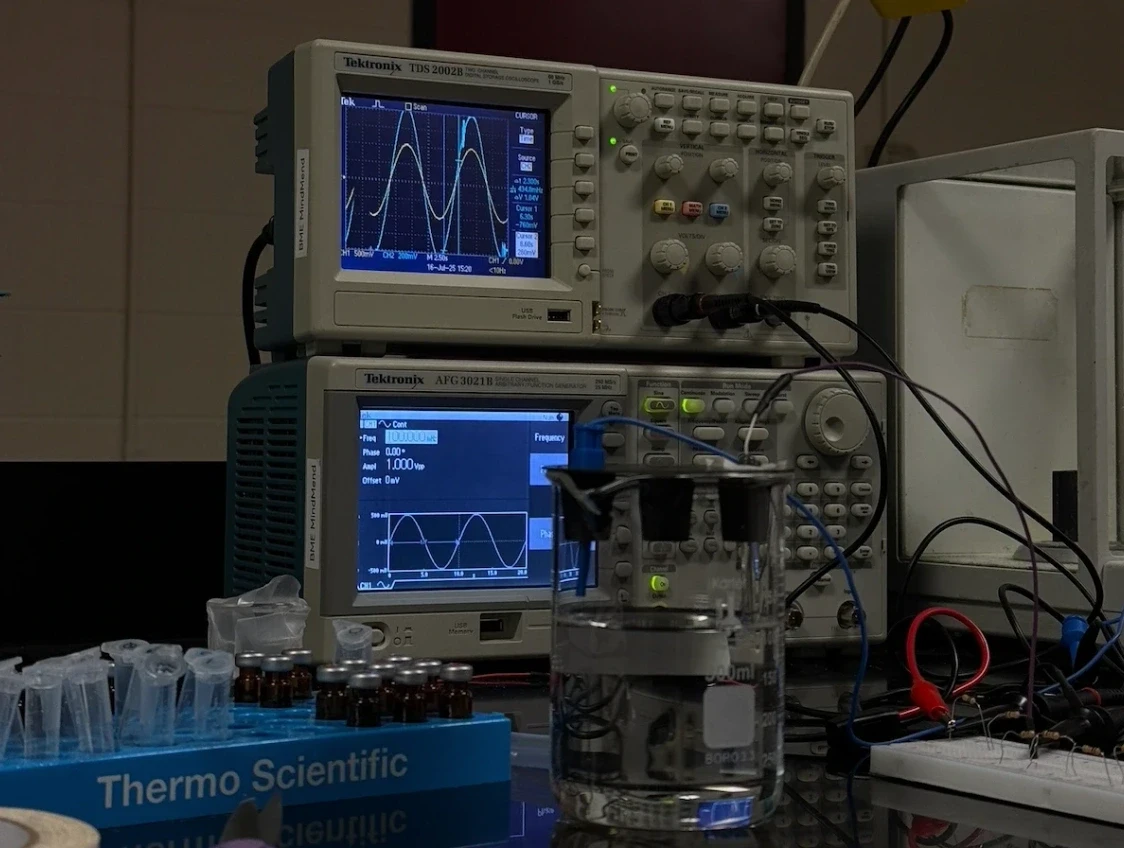
MindMend Biotech project

Contributed to the development of NeuroClear ProPark, a minimally invasive wearable device designed to continuously monitor alpha-synuclein levels as a biomarker for Parkinson’s Disease. Led electrochemical impedance spectroscopy validation and data infrastructure development to improve biosensor precision, reproducibility, and clinical readiness.

  • Automated the testing workflow by programming statistical analysis pipelines in MATLAB, Keil uVision, and Excel VBA, transforming raw impedance measurements into real-time performance feedback and enabling rapid identification of experimental variability.
  • Prepared biomarker samples across controlled concentration ranges while integrating sensor hardware with fluidic and biochemical systems, ensuring compatibility between wet-lab workflows and electrochemical impedance spectroscopy experiments.
  • Entrusted by executive leadership to redesign device-testing standard operating procedures, incorporating biosensor improvements to enhance reproducibility, efficiency, and onboarding for new team members.

Undergraduate Researcher, MRI Imaging

August 2023 - May 2024
Brain and Behavior Institute
MRI imaging research project

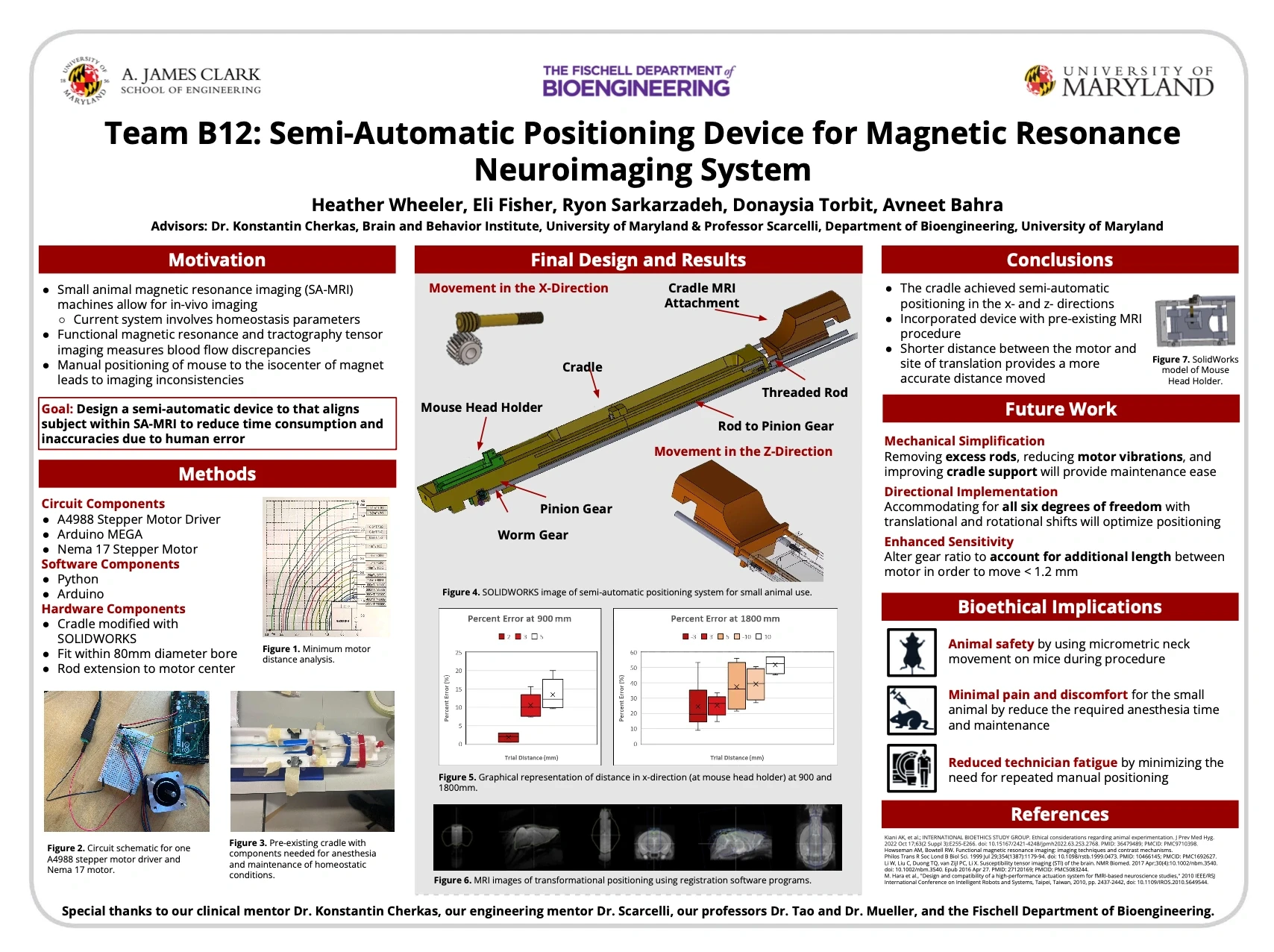
Led the software and hardware integration for a project aimed at improving MRI imaging efficiency for small-animal models. Focused on automating specimen positioning, ensuring accurate imaging alignment, and collaborating with researchers to meet practical experimental requirements. The project reduced setup time and enhanced spatial precision for in vivo imaging sessions.

  • Developed Python scripts for real-time serial communication with Arduino-controlled motors, enabling precision micrometric positioning in the x- and z-directions to ensure isocentric alignment.
  • Performed data analysis and visualization to validate positioning accuracy, quantify reductions in spatial discrepancy, and optimize the mechanical design.

Biomedical REU Intern

June 2022 - August 2022
LO Biosciences

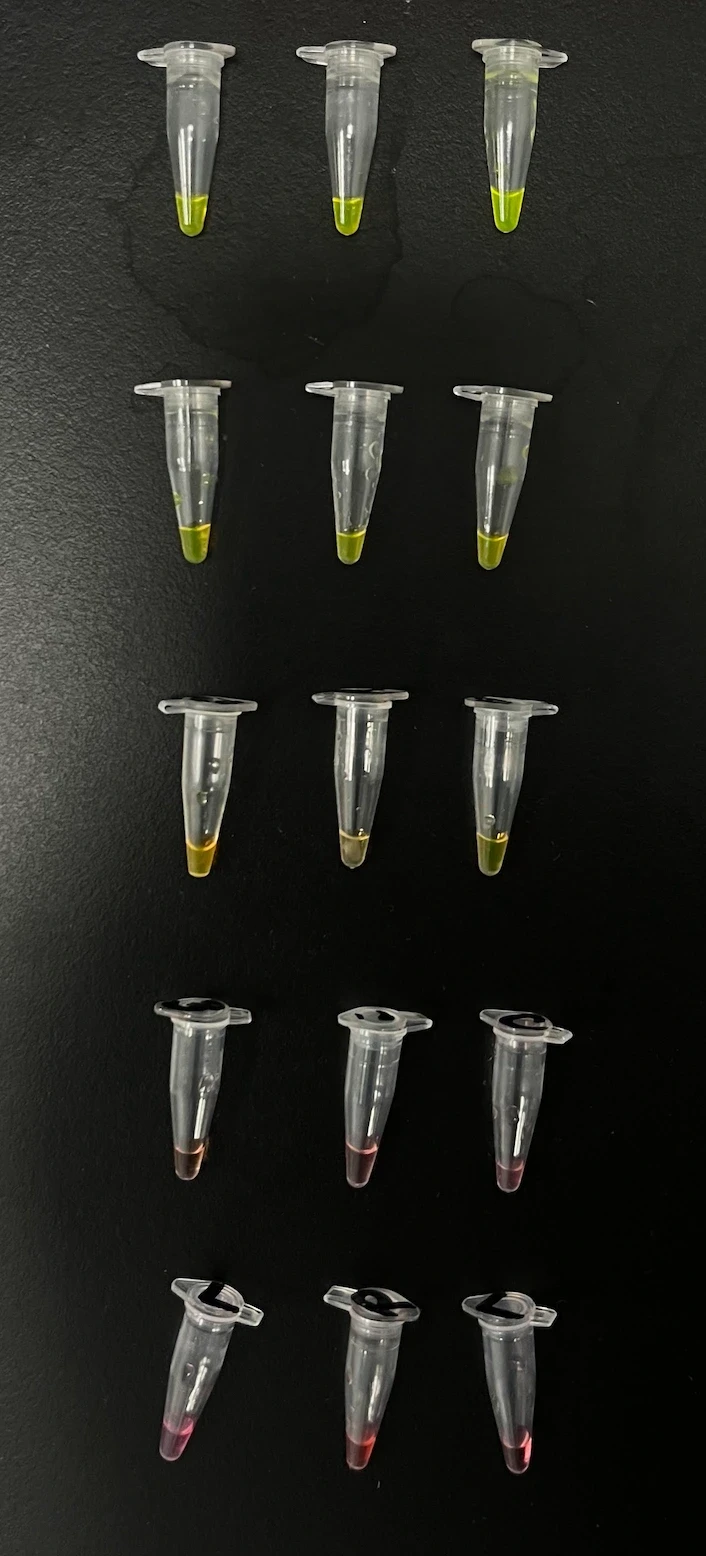
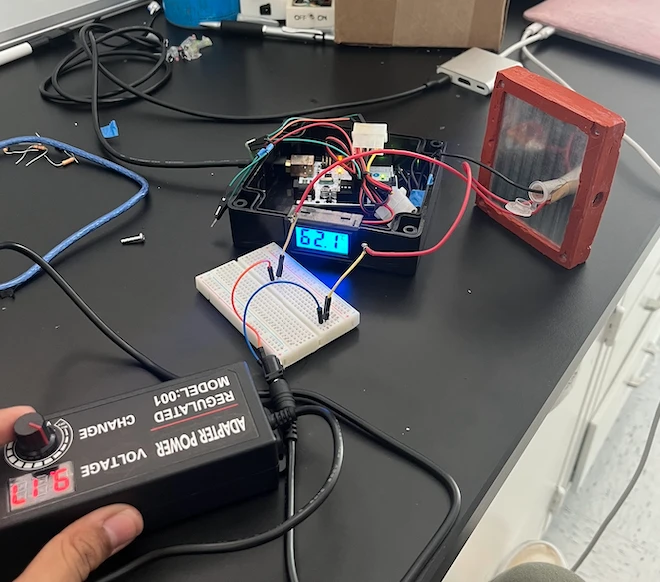
Contributed to the development of a rapid point-of-care HIV diagnostic device. Integrated hardware, software, and biochemical components to create a portable instrument capable of detecting HIV RNA with high sensitivity. Led the design, prototyping, and testing of the device hardware and fluorescence-based detection system while collaborating with the team to refine the instrument for practical use.

  • Engineered and validated a portable loop-mediated isothermal amplification HIV diagnostic system, programming microcontrollers in Arduino IDE to automate fluorescence detection and real-time RNA measurements.
  • Designed and documented more than 10 CAD models in Fusion 360 and SolidWorks, integrated 3D-printed components with custom electronics, and assembled iterative prototypes to optimize device functionality.
  • Developed custom circuitry and a thermal-regulation system to ensure precise amplification conditions, conducting optical testing to maximize fluorescence signal accuracy and sensitivity.